
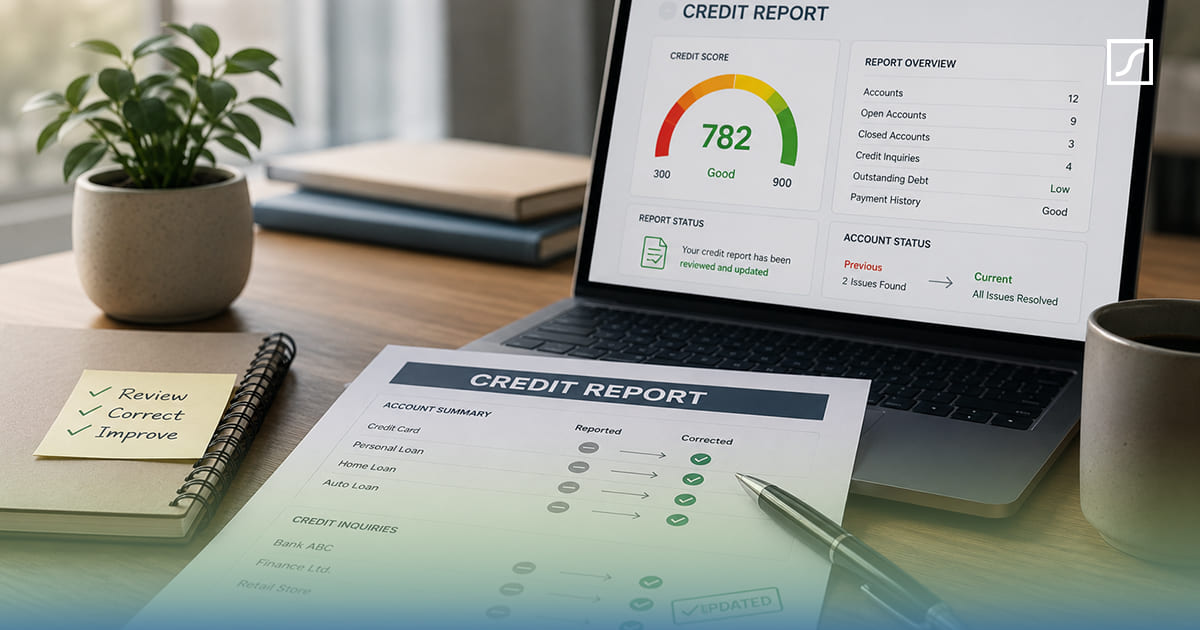

Errors in credit reports can be a frequent phenomenon. It can range from incorrect personal details to wrong credit accounts. These errors will negatively impact your credit score while making it more difficult to obtain a loan or a credit card. Hence, it is essential to know how to rectify errors in your credit report. To avoid further problems, you should rectify the errors in your credit report as soon as possible.
In general, a credit report provides a detailed summary of your credit history and repayment behavior. This report comprises personal information along with all your past and current credit cards and loan details. You can avail yourself of one free copy of a credit report from CIBIL, Equifax, Experian, and CRIF Highmark as per a 2017 mandate from the Reserve Bank of India. Furthermore, applicants can also make an annual, half-yearly, quarterly, or monthly subscription to get their credit scores. Also, you can check your credit report via KenStone Capital.
Whenever you request a credit report with credit scores, you will receive a detailed list of all credit-related transactions for the selected period of time. Any errors or false entries on a credit report can negatively impact the credit score of an individual. Hence, these credit reports must be closely monitored to ensure that the person’s credit score is not damaged.
Before jumping into the process of rectifying errors in your credit report, it is essential to know about the types of errors that may be present in your credit report. Given below are some of the possible errors that can be part of any credit report:
Incorrect personal details
The most common type of errors in any CIBIL report are personal details of the applicant, which include name, address, age, date of birth, PAN Card details, and other personal information.
Duplicate account
A duplicate account in the name of the applicant is another common error. Multiple accounts in the name of an applicant may exist, some of which may have a poor credit history. This type of account can adversely affect the CIBIL score of the applicants. Hence, it is highly recommended to identify such types of accounts.
Incorrect balance
To reflect the applicant’s true credit status, the applicant’s current outstanding balance and the actual amount due must match. This is yet another area where an error must be identified and corrected as soon as possible.
Outstanding loans
An applicant’s outstanding loans are important in determining his or her current credit score. If there is a mistake in disclosing the applicant’s outstanding balance or the terms of the loan, those errors must be reported right away to prevent any negative effects on credit scores.
Non-updating of the current balance
Another crucial error that needs to be rectified is that the applicant’s current balance is not correctly updated. This means that if the outstanding amount has been paid, the details in the CIBIL report must be revised. In general, there is a gap between the payment of the dues and the reflection of such payment in the credit report. This type of error must also be identified and corrected at the earliest.
Let’s See The Various Steps Involved In Rectifying Errors In A Credit Report:
Step 1:
The first step is to log in to the CIBIL website and fill out an official online dispute form.
Step 2:
While filling out an online form, the applicant must provide all relevant information, such as the details of the error or fraudulent entry in the CIBIL report, as well as personal information. All of these details must be accurate and correct, according to the applicants.
Step 3:
Along with the abovementioned details, the applicant will also have to provide the 9-digit control number that can be used to identify the report with the disputed matter.
Step 4:
After filing the dispute application successfully, it will be forwarded to the corresponding lender or bank for the purpose of verification of the applicant’s claim.
Step 5:
Later, the lender will verify the applicant’s claim at their end, and if the claim of the errors is confirmed, the same will be notified to the CIBIL Bureau. CIBIL will then update the credit report to reflect the changes and will send a revised edition to the applicant. Through email, the applicant will be informed about the changes or rectifications in the credit report. This entire process of filing disputes and rectifying them is a lengthy process that will take 30 days.
Bottom Line
Rectifying errors on your credit report on time is crucial. It will help you boost your credit score and increase your chances of getting a loan or credit card. As a result, it’s a good idea to update your credit reports regularly and keep track of your credit score and the accuracy of the information on your credit report.
Are you looking for Credit Score Improvement Services? Contact us
Frequently Asked Questions
1) Why is it important to regularly check my credit report for errors?
Errors in your credit report, such as incorrect personal details or fraudulent accounts, can lower your credit score. A lower score makes it significantly harder to qualify for loans or credit cards and may result in higher interest rates. Regular monitoring allows you to catch and fix these issues before they impact your financial goals.
2) How long does the credit report rectification process typically take?
Once a dispute is filed, the credit bureau forwards the claim to the relevant bank or lender for verification. The entire process, from filing the dispute to receiving a revised credit report, generally takes approximately 30 days.
3) Can I dispute errors directly with the credit bureau online?
Yes. The most efficient way to start is by logging into the official CIBIL website and filling out the online dispute form. You will need to provide your personal information, the details of the error, and your 9-digit control number.
4) What happens after the lender verifies my dispute claim?
If the lender confirms that an error exists, they notify the credit bureau. The bureau then updates your records to reflect the accurate information and sends you an email notification along with a revised version of your credit report.