
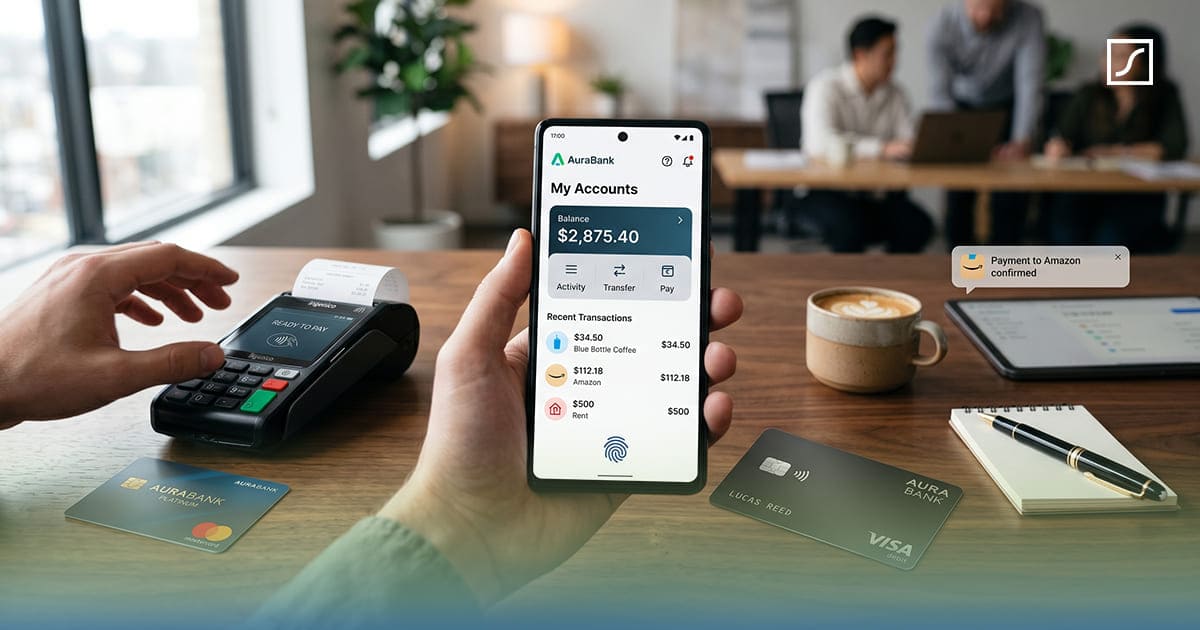

Digital Banking: Why the Old Way is Fading Fast
The whole idea of “banking as a place you go” is pretty much over because banking is now just a service you use or even a background process that happens without you having to think about it much. We’re seeing this massive industry shift where money stuff isn’t stuck in its own bubble anymore since it’s now woven right into the fabric of our daily digital lives.
- The Data Shift: Global fintech adoption has surpassed 75% among those who’re online, and AI-driven transactions now handle a massive share of real-time fraud detection.
- The AI Reality: Most top-tier banks have moved way beyond those annoying basic chatbots to Agentic AI, which are systems that can actually make smart financial decisions for you.
The Urgency: The market isn’t playing nice anymore, so banks clinging to clunky legacy structures aren’t just falling behind; they’re losing customers to digital-first rivals that prioritize speed and specialized services like credit score repair to keep their financial health in check.
What Exactly is the Digital Frontier in Banking?
Modern digital banking is a lot more than just a shiny app on your phone since it’s really about moving from a reactive service to proactive help. It basically means having every single banking service available through internet platforms and turning traditional things like checks and pay-in slips into purely digital formats.
- Traditional vs. Digital Ecosystems: While old-school banks focus on physical vaults and paper trails, digital-first banks obsess over User Experience (UX) and making sure data flows instantly between different apps.
- The Evolution: We’ve gone from Mobile Banking, where you just check your balance, to AI Banking that predicts your savings, and finally to Embedded Finance, where you get a loan right when you’re buying something on a website.
- Key Components:
- Neobanks: Fully digital institutions without any physical branches.
- Open Banking APIs: The “glue” that lets your bank talk to your taxes or investment apps securely.
- API Ecosystems: A whole network where different money tools work together perfectly to give you a full view of your wealth.
Why Traditional Banking Models Are Falling Behind
The “old way” is finally hitting a wall, and traditional banks are feeling the heat from four main directions that are making their lives difficult:
- Legacy Infrastructure: Trying to handle Legacy System Modernization is a nightmare when your core is built on code from decades ago that wasn’t designed for the cloud.
- Slow Customer Experience: In a world where we want everything now, waiting 48 hours for “processing” or a manual signature feels like an eternity.
- High Operational Costs: Paying for thousands of physical branches and ATMs is becoming a huge money pit instead of a benefit, as more people prefer banking from home.
- Fintech Disruption: Agile startups are picking off the best parts of banking, like payments and loans, and doing them way better with lower fees.
| Problem | Impact | Result |
| Outdated Systems | Can’t launch new features | People leave for better apps |
| Manual KYC Processes | Onboarding takes days | People quit halfway through |
| Rigid Data Silos | No personalized advice | Low user engagement |
| High Overhead | Lower interest rates for you | Shrinking profits for banks |
Key Digital Banking Trends Shaping the Future
To stay in the game, the industry is going all-in on these major trends that are changing how we handle money:
1. AI & Machine Learning in Banking
Banks are using Agentic AI for super-accurate credit scores and Robotic Process Automation (RPA) to handle all that boring back-office paperwork without any human errors. This means faster fraud detection and a bank that actually knows what you need before you even ask.
2. Open Banking & APIs
Supporting Data Democratization is huge because it allows you to see your whole financial life in one spot. It encourages third-party integrations so your banking data can help you get better deals on insurance or mortgages automatically.
3. Blockchain & Decentralized Finance
With the rise of Central Bank Digital Currencies (CBDCs) and the ISO 20022 Standard, sending money across borders is becoming instant and transparent, which used to take days and cost a fortune.
4. Embedded Finance
Banking is moving inside other apps, like when you see “Buy Now Pay Later” options while shopping online or getting car insurance directly through your car’s dashboard without ever calling a broker.
5. Neobanks & Digital-Only Banks
Institutions like those using a Cloud-Native Core allow for faster onboarding and significantly lower costs because they don’t have to pay for expensive real estate anymore.
Scenario: A Digital Banking Experience
Think about a person who is a freelancer trying to get a quick personal loan for a laptop upgrade.
- The Old Path: The person who goes to a traditional branch, and they ask for six months of physical bank statements and a salary slip, and then they tell them it’ll take a week just to review it.
- The Digital Path: The Person who logs into a digital-first app that uses Open Banking APIs to pull their history instantly. The AI-Powered-Debt-Recovery algorithms check the risk, and the person gets an approval in 5 minutes.
- The Result: The person who buys the laptop that same afternoon, and the traditional bank loses out on the interest because they are still busy printing their forms.
The Verdict: Banks aren’t losing people because of their interest rates; they’re losing them because they can’t keep up with the clock.
What Financial Institutions Must Do Now
To survive the “Digital Frontier,” banks need to stop talking and start acting with this simple plan:
1) Invest in Cloud-Native Tech:
Stop trying to patch old systems and move to a cloud setup so you can grow fast and stay secure.
2) Partner with Fintechs:
Use Banking as a Service (BaaS) to put your services on other platforms where the customers already spend their time.
3) Go Zero Trust:
In a digital world, security has to be “never trust and always verify” using Biometric Authentication to stop high-tech hackers.
4) Enhance the Experience:
Focus on the “Phygital” mix by keeping the trust of a bank but giving it the speed of a startup.
Benefits vs. Risks of Digital Banking
| Benefits | Risks |
| Speed: Everything happens instantly | Cybersecurity: New ways for hackers to get in |
| Accessibility: Banking for everyone, anywhere | Data Privacy: Tons of sensitive info at risk |
| Cost: Way lower fees for the user | Tech Gap: Leaving behind people who aren’t tech-savvy |
The Future of Banking in a Digital-First World
We’re heading toward Invisible Banking, where you won’t even open a bank app anymore since your AI agent will be busy negotiating the best mortgage for you while you sleep. Super Apps will eventually handle your health, your travel, and your wealth in one single place, all secured by Behavioral Biometrics that are unique to how you hold your phone.
Final Thoughts
Digital banking is no longer optional for any institution that wants to exist in the long run. The structural shift in the industry is complete, and the banks that actually win will be the ones that see technology as the heart of their relationship with customers rather than just an expense.
FAQs:
1. What’s the big deal with Digital Transformation in banking this year?
It’s basically about making things faster and more personal. Instead of just putting old banking services online, banks are using data to predict what you actually need. Whether it’s a smoother app or a loan that gets approved in minutes, the goal is to make managing your money feel like a natural part of your digital life rather than a chore.
2. How exactly does AI in Banking help me as a customer?
Think of it like having a smart assistant for your wallet. AI helps banks spot weird spending patterns to stop fraud early, and it also powers those “financial health” features that show you how to save better. It’s moving away from just answering basic questions and toward actually giving you personalized advice based on your real-life habits.
3. Is my money actually safe with all these new Digital-First Banking apps?
Security is the top priority right now. Most of these apps use cybersecurity tools that are actually more advanced than old-school banks, like facial recognition and behavioral tracking (which can tell if it’s really you based on how you hold your phone). Plus, they’re still regulated just like traditional banks, so your deposits are generally protected by the same insurance.
4. What is the difference between Open Banking and Embedded Finance?
They’re like two sides of the same coin. Open Banking is the “behind the scenes” part where you give your bank permission to share data with other apps. Embedded Finance is the result you see, like being able to pay for a pizza within a delivery app or getting an “easy monthly payment” option at online checkout without ever leaving the site.
5. Does Sustainable Banking actually make a difference?
Definitely. When you choose a bank that focuses on ESG in Finance, your money isn’t just sitting in a vault; it’s being used to fund things like solar farms, green housing, and small businesses. It’s a way to make sure your financial growth isn’t coming at the expense of the planet or the community.