
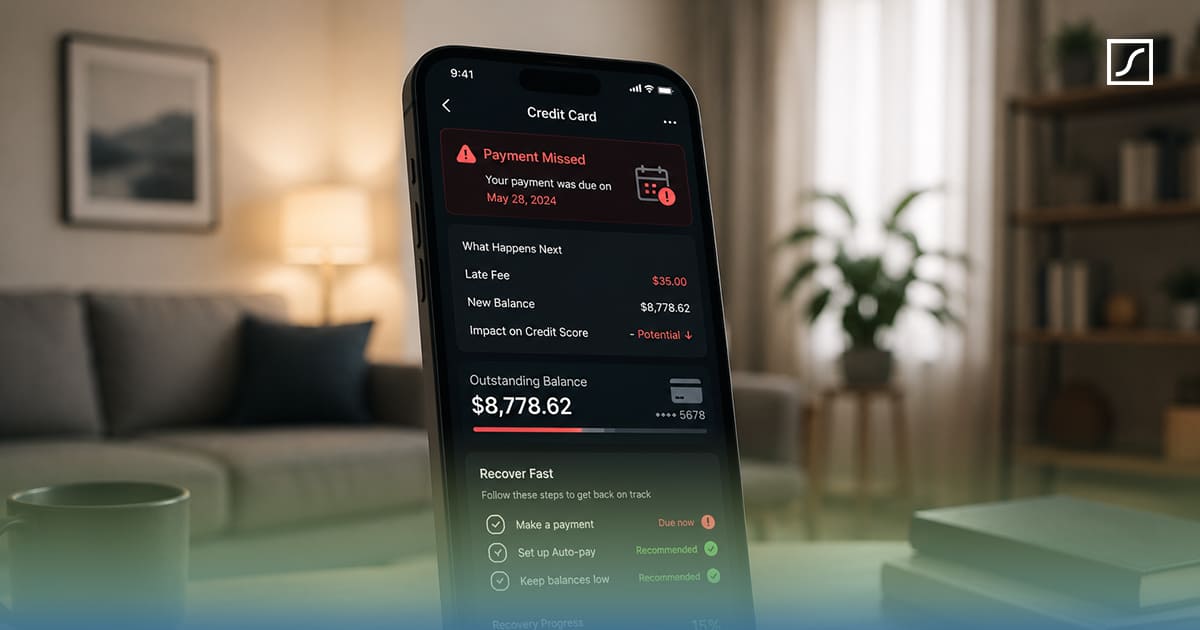

Always make credit card payments on time to maintain your CIBIL Score. YES, a single failed credit card payment can drop your credit score. Even though a failed payment may have been a mistake or the inability to pay (we all have financial difficulties), lenders view this negatively. They may affect your ability to obtain credit in the future.
Remember, this only applies to credit cards. It also applies to add-on cards, where you’re responsible for others’ spending.
Impact on your finances and your CIBIL Score
The CIBIL Score and your finances can be affected by a single missed payment. It is important to remember that the interest on missed payments (including the late payment fee) is compounded daily. An outstanding balance on a credit card can have interest rates ranging from 3-4% per month (principal, interest, and late fees).
If you think you missed your payment by a day or a week, your interest liability may be larger than anticipated. The amount you owe will be significantly affected if you only pay the minimum due or do not pay for a few months.
Let’s only pay the minimum expected for six months. You purchased Rs. 1,000 on your credit card on April 1st at a 3% interest rate. During the next six months, you only make minimum payments (5% of the outstanding balance at the end of each month) and do not spend any additional funds on the credit card.
Upon clearing your balance after six months (December), you will pay Rs. 1,560 – 56% more than the original amount.
Choosing a minimum payment option without making any more purchases on the card can extend your repayment period to almost 9 years!
Your CIBIL Score will be negatively affected if you fail to pay minimums, and you will pay more than twice what you originally paid. When applying for a credit card, it’s essential to read the fine print and pay on time.
Factors that impact your CIBIL Score in Percentage:
The CIBIL Score is calculated based on your credit history over the last 24 months, and it is affected by four factors:
- Payment history: History of paying installments on time accounts for 30% and its most critical factor that boosts your CIBIL score
- Credit Exposure: It accounts for 25% of your total outstanding debt and behavior.
- Credit type and duration: History established from secured and unsecured loans accounts for 25%.
- Other factors include credit utilization by the individual and recent behavior (inquiries/accounts opened in the recent past), etc.
Even though the credit report is generated for 36 months, it will remain on your credit history forever. As many as two years can pass before your credit score is affected by a missed payment. It takes years to build a credit score and just an instant to damage it.
How to Minimise the Impact of Late Payment?
Talk to your lender: Try negotiating with your lender in case of late payments. You can offer to settle the debt by paying the entire amount in full and ask the lender not to record the late payment. The lender may or maynot will approve your request. The lenders may consider you if you have been consistent with your payments for a long time.
Errors on credit reports should be disputed: An error in your credit report can lower your credit score. You should immediately dispute the error with the credit bureau when this occurs. To dispute the errors, follow the credit bureau’s website steps. Consumers have the right to challenge errors in their credit reports.
If you miss one payment, your credit report should still be satisfactory. It is essential to pay the upcoming bill payments on time. Late payments should be avoided. Act now to improve your credit score.
How to Avoid Late Payments in the First Place?
An auto debit option can help: Auto debit can assist you in keeping track of your credit card payments. To avoid late payments, you can instruct your bank to debit the credit card bill by a specific date.
Set up alerts or reminders: Setting up text or email alerts will help you remember to make payments. Make sure to set reminders on your phone’s calendar as well.
Monitor your credit report: Monitoring your credit report is a good habit. Your credit report can contain errors related to your credit accounts. Additionally, it keeps you informed about your credit score. You can fix the areas you lack, thereby improving your credit score.
Stick to a financial budget: It is essential to have a financial budget and stick to it. You should control your impulse to shop and maintain a monthly budget. Sticking to your financial budget will help in making timely and full payments.
Getting your score back on track
Getting your credit back on track is possible. Here are two ways to help build your credit score:
- Make sure all outstanding credit card debt is cleared. Part payments or minimum payments indicate difficulty repaying dues. Further, if your amount overdue snowballs, it will negatively affect your CIBIL Score and expose you to debt traps. Additionally, if a pending credit card payment is reported as “Settled” or “Written off”, you will lose access to credit in the future.
- Paying off your cumulative debt balances with a personal loan at a lower interest rate can be a cost-effective way to avoid ballooning debt balances. Additionally, you can borrow against your gold, take a loan against your fixed deposit (without breaking it), or even invest in LICs, mutual funds, and securities to get 50-80% of your asset value. Lower interest rates will result in more manageable monthly payments without the problem of exponentially ballooning debt.
In addition to these measures, it is always better to adopt a proactive approach to financial discipline after missed payments:
- Keep your payments up-to-date.
- Keep your debt to a reasonable level.
Benefits you get by maintaining a high CIBIL Score?
A higher score can lead to better loan offers at competitive interest rates because lenders reward consumers who have demonstrated financial discipline. Additionally, emergencies sometimes announce themselves in advance, and having a high CIBIL Score will ensure you can get funding quickly (especially in a medical emergency). Missed payments can negatively affect your credit score, but regular and credit-healthy habits can improve it.
Frequently Asked Questions
What is the impact of a late payment on my credit report?
Ans: Late payment record remains for seven years post the account was reported on your credit report.
What is the impact of a late payment on my credit score?
The impact of your late payment fades eventually. Your credit score may be hampered by around 80-100 points.
What is the best way to remove a late payment from my credit report?
You can dispute the late payment reported on your credit report with the respective credit bureau if you think it was incorrectly reported.
When will my credit report show late payments?
If you notice a sudden drop in your credit score, check your credit report. To confirm late payment issues, you can narrow your credit report from different bureaus.